Two books. One intellectual journey.
The first asks how people become recognized and trusted by economic institutions. The second asks what societies may lose when capable people remain underrecognized or underutilized over time.
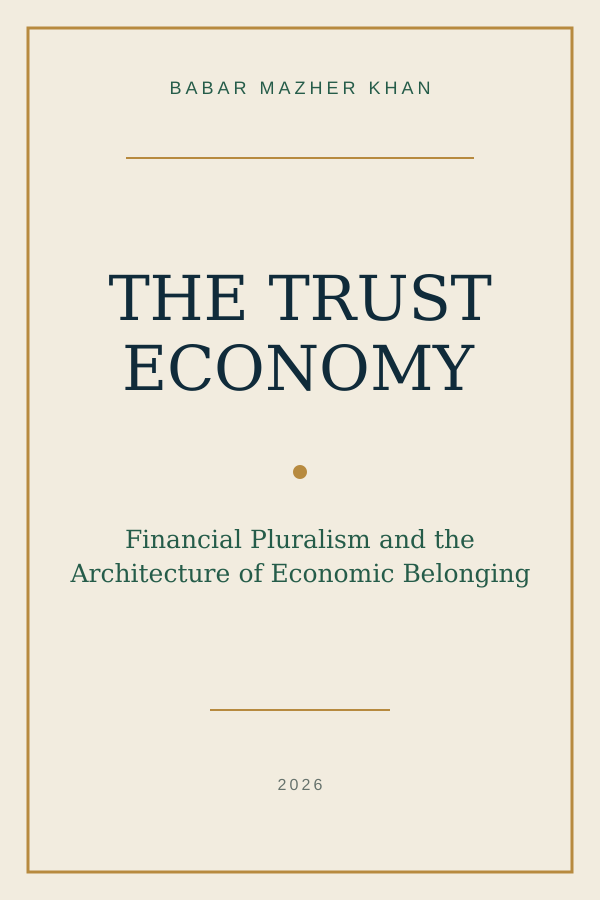
The Trust Economy
Financial Pluralism and the Architecture of Economic Belonging
The book begins with a simple proposition: a person can be counted and still not be recognized. Modern institutions can record identities, accounts and histories while still failing to interpret contribution, responsibility or capability in ways that create meaningful economic opportunity.
The book explores how trust travels — or fails to travel — across migration, work, care, finance, ownership and institutional boundaries.
Access is not the same as agency, and formal inclusion is not always the same as economic belonging.
Free chapter: a selected chapter will be added shortly. The complete commercial edition will link to the authorized Amazon listing when available.
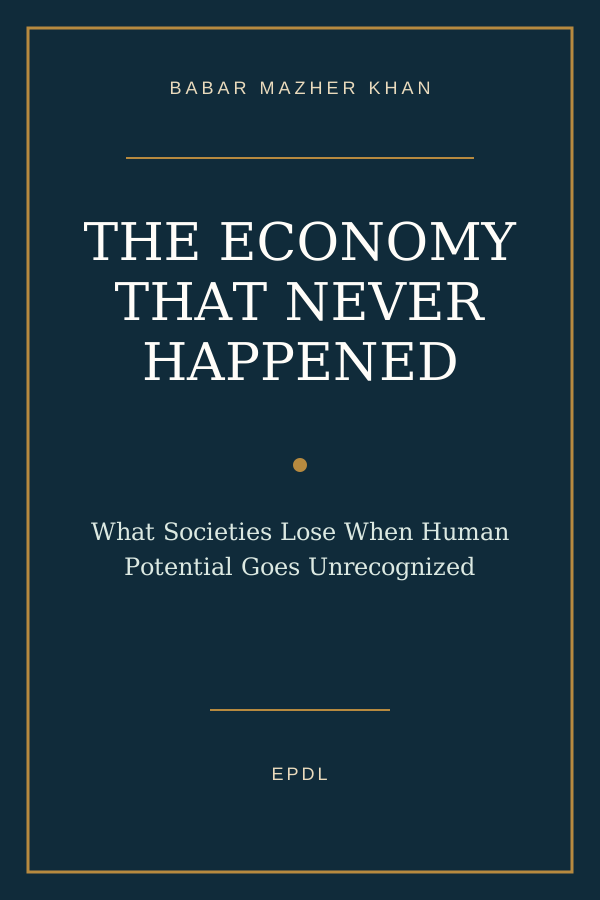
The Economy That Never Happened
What Societies Lose When Human Potential Goes Unrecognized
This book turns from recognition to consequence. It asks what economic value may never materialize when credible human capability is not adequately recognized, financed, developed, utilized or retained.
Rather than claiming a finished answer, it develops Economic Pluralism Dividend Loss (EPDL) as a disciplined research agenda and an invitation to empirical work.
The missing economy is not whatever we wish had happened. It is the portion of unrealized contribution we can defend with evidence.
Free chapter: a selected chapter will be added shortly. The complete commercial edition will link to the authorized Amazon listing when available.